Creating a SaaS community is one of the best ways to retain users, reduce churn, and lower support costs. Communities shift interactions from one-way communication to dynamic, user-driven exchanges. Here’s why it matters:
- Retention and Engagement: Brands with active communities see a 53% higher retention rate and 124% better engagement.
- Cost Savings: Peer-to-peer support can cut support costs by up to 54%.
- Feedback Loop: 90% of brands use community feedback to improve their products.
- Growth: Since 2020, there’s been a 22% increase in hiring dedicated community teams.
This guide covers 10 actionable tips to build a thriving SaaS community, including platform selection, content seeding, user onboarding, live events, and power user programs. Whether you’re looking to boost engagement or create a space where users help each other, these strategies will help you build a community that drives growth and loyalty.
Quick Overview:
- Choose the right platform mix (e.g., Slack, Discord, Circle)
- Seed your community with content before launching
- Promote through email, partnerships, and social channels
- Start regular conversations and polls
- Host live events to build real-time connections
- Encourage peer-to-peer support
- Set up a clear onboarding process
- Recognize top contributors with power user programs
- Create sub-communities for specific topics
- Offer exclusive spaces for your most engaged users
Let’s dive into how you can put these tips into action and build a community that delivers real results.
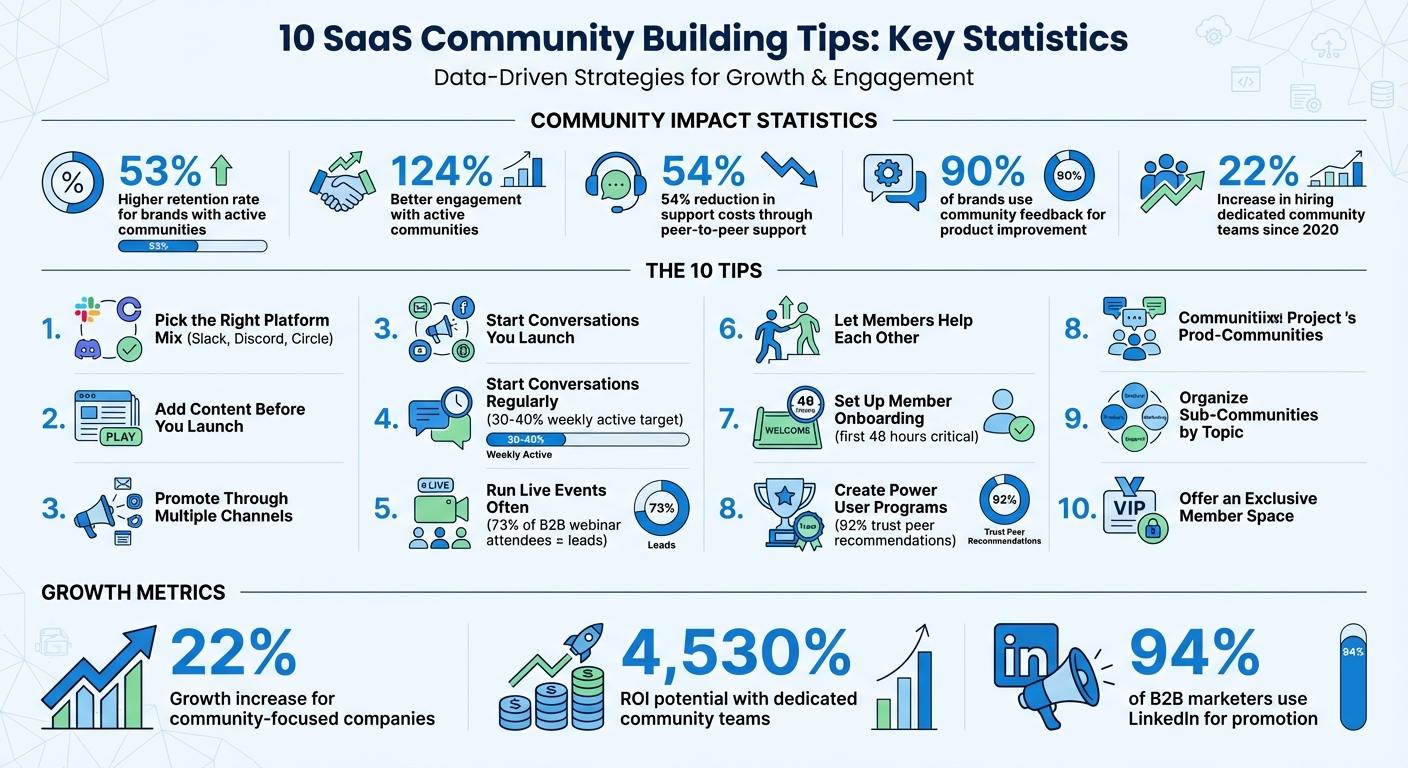
SaaS Community Building: Key Statistics and Impact Metrics
S2E7 - How to build a community as a B2B SaaS? with Mike Rizzo
sbb-itb-e3aed85
1. Pick the Right Platform Mix
The platform you choose plays a huge role in shaping how your community interacts and sticks around. For example, Slack is a go-to for B2B users who need daily support and communication. On the other hand, Discord thrives in developer communities where quick, technical conversations are the norm.
If you're looking for something beyond real-time chats, platforms like Discourse or Circle offer a big advantage: they create searchable, permanent knowledge bases. These are perfect for building support libraries that can cut down on future support tickets. As Andy Cabasso, Co-founder of Postaga, puts it:
Conversations on Slack and Discord are very ephemeral, so they may not make sense for a community where members only check in a few times a week rather than hourly or daily.
To expand your reach, consider pairing these tools with accessible social platforms. Facebook Groups, LinkedIn, and Reddit are great for attracting larger audiences with minimal barriers to entry. For instance, Ahrefs and Notion have grown thriving communities on these platforms. However, keep in mind that while these spaces are excellent for visibility, you’ll have less control over features and moderation.
The most successful SaaS communities use a mix of channels. Combine real-time platforms for immediate support, structured forums for long-term knowledge sharing, and social media for broader engagement. To make the right choice, map out your users’ habits or survey your most active members to find out where they prefer to interact.
Ultimately, align your platform choices with your community’s goals - whether it’s support, networking, or knowledge-sharing - to keep members engaged for the long haul.
2. Add Content Before You Launch
An empty community space can feel uninviting. When new members arrive to find blank channels and no activity, they’re likely to leave just as quickly as they came. Nathan Latka from Founderpath sums it up perfectly:
"An empty community is a dead community. Kickstart engagement by creating and sharing content that sparks conversation and provides immediate value."
- Nathan Latka, Founderpath
Start by filling your community with essential content. This includes basics like community guidelines, FAQs, and a pinned "start here" post. Beyond that, add resources that establish your expertise - tutorials, how-to guides, or curated industry materials can make a big impression.
Successful examples show how impactful this can be. Mode's CEO Derek Steer and his team created "SQL School", a series of tutorials that pulled in hundreds of thousands of visitors each month and helped the company reach over $19 million in ARR. Similarly, Mikael Dia, founder of Funnelytics, seeded his Facebook group with valuable content, growing it to 3,000 members in just two months. Within 48 hours of the official launch, the group generated $28,000 in revenue.
Spark conversations by encouraging participation. Create threads where members can introduce themselves, polls about industry challenges, or prompts like "share your wins." GrowMotely, for instance, launched a "Future of Work" survey before their platform even went live. This effort built a waitlist of 5,300 people and converted 793 professionals and 50 companies into registered users within the first month. These kinds of activities not only drive early engagement but also set the tone for the community’s culture.
3. Promote Through Multiple Channels
To attract high-quality members, proactive promotion is essential. Companies with dedicated community teams have seen membership growth of 22% and an ROI as high as 4,530%. Taking a strategic approach to promotion can make a huge difference.
Start by using your owned channels - like email newsletters, blogs, banners, and pop-ups - to guide traffic to a well-designed community landing page. This not only improves SEO but also makes outreach efforts more effective. For B2B SaaS companies, LinkedIn stands out as a top platform for promotion, with 94% of B2B marketers using it to connect with professional audiences. However, relying solely on your channels might limit your reach, so it’s smart to look outward as well.
Strategic partnerships can help you expand without breaking the bank. Take Canva, for example - they built a network of 9,000 partnerships, including YouTubers, bloggers, and B2B organizations, to scale their referral efforts far beyond their initial program. Another idea is to collaborate with complementary SaaS brands for webinar swaps. By hosting a guest expert from a partner company, you can introduce their audience to your community, and vice versa.
Don’t overlook dark social platforms like niche Subreddits, Slack channels, Discord servers, and Facebook Groups. A great example here is Notion. In 2021, the company tapped into Reddit and launched a "Notion Pros" ambassador program, which helped them grow to a $10 billion valuation and over 2 million users. CRO Olivia Nottebohm recruited 60–90 influential creators who promoted Notion across their networks. This kind of grassroots promotion can be incredibly effective.
Lastly, exclusivity can create buzz and drive demand. Consider using an invite-only model or offering pre-launch access to generate excitement. Pair this with referral incentives, like SaaS referral program software or ambassador programs, to keep the momentum going.
4. Start Conversations Regularly
A community without regular communication tools and interaction feels empty. What sets a lively, engaged space apart from a ghost town is consistent, thoughtful prompts that invite participation. Polls are a great way to get things rolling - they’re easy for members to engage with and can lead to deeper discussions. For example, after a poll, you can ask, “Why did you choose this option?” to turn simple clicks into meaningful conversations. These regular touchpoints are the foundation for stronger connections within the community.
Creating routines can also keep members coming back. Instead of posting sporadically, consider establishing predictable events like a weekly “One-Word Wednesday,” where participants sum up their week in a single word, or a “Weekly Wins” thread every Friday to celebrate achievements. This rhythm keeps the activity consistent without overwhelming members' feeds. Ideally, aim for about 30–40% of members to be active on a weekly basis.
Polls can be versatile tools for engagement. Use single-choice polls to help prioritize features or multi-choice polls with an "Other + comment" option to uncover unexpected insights. Regular pulse polls, like monthly NPS-style check-ins, can provide valuable feedback and help gauge member sentiment over time. This feedback loop not only strengthens the community but also supports agile product development.
Sustaining conversations requires active moderators. Just as early content seeding sparks engagement, moderators play a critical role in keeping the momentum alive. Set clear expectations, such as responding to posts within 24 hours, to prevent threads from going cold. Moderators should engage authentically by sharing their own insights and addressing challenges. As Jasen Hunt, a Professional CAD Instructor, explains:
The people inside of the communities are the ones that are cheerleading for you the most.
This kind of genuine interaction builds trust far more effectively than corporate messaging ever could.
When feedback leads to product changes, make sure to acknowledge it publicly. Highlighting how a suggestion turned into a new feature not only boosts credibility but also encourages more participation. This approach transforms one-way communication into a feedback loop that keeps members engaged. By focusing on the depth and quality of conversations - rather than just the quantity - you create a space where members feel valued and invested. These strategies are an integral part of any successful community engagement plan.
5. Run Live Events Often
Live events are a powerful way to strengthen community bonds, turning passive members into active participants. While asynchronous channels are great for keeping conversations going, they often miss the personal touch that live interactions bring. Webinars, Q&A sessions, and AMAs (Ask Me Anything) provide that human connection, offering real-time engagement that text-based communication just can’t match.
Regularly hosting live events helps maintain consistent engagement. Different formats serve different purposes: fireside chats offer casual conversations, educational webinars dive into specific topics, coffee chats create a relaxed atmosphere, and virtual summits provide an immersive, multi-day experience. Interestingly, the best SaaS software solutions and technology companies dominate this space, accounting for 29% of all marketing webinars. Even more compelling, 73% of B2B webinar attendees qualify as leads.
Timing is everything. Hosting events during peak hours - like Wednesdays at 11:00 AM or 2:00 PM for 30–45 minutes - can significantly boost attendance rates. Participation often jumps from the usual 40–50% to over 60% when strategically scheduled.
To make sessions more engaging, incorporate live chat icebreakers, real-time polls, and video Q&A. These interactive elements keep members involved throughout the event. As Janessa Lantz, VP of Marketing at dbt Labs, points out:
The real value comes through relationships established with other people.
Consistency is key. Smaller organizations may find quarterly events manageable, while larger communities can thrive with monthly sessions. Don’t forget to share follow-up resources like recordings and key takeaways within 24–48 hours. This is crucial, as 24% of webinar views happen 20 days or more after the live event. By extending the value of these sessions, live events become an essential complement to your community engagement strategy.
6. Let Members Help Each Other
A thriving community is built on members actively supporting one another. This transforms passive users into engaged participants, strengthening their ties to both the product and the community. Many top SaaS brands have embraced this approach successfully.
Take Zapier, for instance. They award badges for "best answers" and have a dedicated section where experienced users can easily share solutions. This setup creates a self-sustaining support network, where users help each other solve problems. Similarly, HubSpot organizes discussions into categories like CRM, Sales, and Marketing, encouraging users to exchange "tips, tricks, and best practices." This structure has led to thousands of peer-resolved threads, easing the workload for official support teams. Plus, since these forums are searchable, a single solution can assist countless users who encounter the same issue later on.
Recognizing contributions is another way to keep this cycle of support going. Notion's ambassador program is a great example of how acknowledging expertise can fuel community growth. Olivia Nottebohm, CRO at Notion, sums it up well:
Community is a force that should power every stage of the funnel.
Simple gestures like publicly thanking members, spotlighting user-made tutorials, or marking "Best Answers" encourage more participation. When users see their efforts appreciated, they’re more likely to continue contributing. The result? Peer support that not only cuts down on support costs but also fosters deeper engagement - an essential ingredient for any successful SaaS community.
7. Set Up Member Onboarding
The first 48 hours can make or break engagement in your community. Emma Catranis, Sr. Customer Education Manager at Circle, puts it perfectly:
"Without a strong member onboarding process, driving meaningful engagement in your community will be an uphill battle."
To kick things off, create a "Start Here" space - a welcoming hub for new members. Think of it as your community’s front porch. This space should include a warm welcome message, a simple map of the community’s key areas, and clear instructions for what to do next. Imagine hosting a guest: you’d greet them, show them around, and introduce them to others. The same principle applies here.
Break the onboarding process into small, manageable tasks. Start with something easy, like asking members to "React to a post", before moving on to more involved actions like "Write a detailed introduction." Community Strategist Carrie Melissa Jones suggests:
"Order the tasks in this list from lowest to highest lift. This way, members can accumulate small wins and build confidence as they progress through the list."
This step-by-step approach not only builds confidence but also accelerates member activation. Circle's 2024 Community Benchmark Report highlights that communities offering guided tours and conversation starters see new members becoming active twice as fast. While the full onboarding process might take 2–4 weeks, those first 48 hours are crucial for setting the tone. Use tools like automated welcome emails, personalized direct messages, or short video walkthroughs to help members navigate the platform and discover its value.
To strengthen early engagement, establish clear community guidelines. These guidelines foster a sense of psychological safety while reducing support queries. Pairing new members with experienced users can also help them feel connected and engaged faster. A well-structured onboarding process doesn’t just welcome members - it sets the stage for the vibrant, ongoing interactions that fuel a thriving SaaS community.
8. Create Power User Programs
Formalizing power user programs is a smart way to tap into the energy and enthusiasm of your most engaged community members. These are the people already answering questions, sharing advice, and advocating for your product. By creating a structured program, you can recognize their efforts and encourage even greater participation.
The first step is identifying these power users. Dive into product usage data to spot those who log in daily and use advanced features with ease. Keep an eye on feedback channels for users submitting detailed bug reports or offering constructive ideas. Community forums are another goldmine - look for members consistently providing highly rated answers or helping moderate discussions. Your Customer Success team can also nominate standout users who’ve achieved impressive results with your product. Tools like Net Promoter Scores (NPS) can help pinpoint your most passionate fans. Once identified, you can invite them into a program that amplifies their contributions while rewarding their efforts.
A great example of this is Notion’s "Notion Pros" program. What began with just 20 exclusive participants grew to include around 90 ambassadors, each with at least 10,000 social media followers. These ambassadors helped spread Notion’s influence far and wide. As Olivia Nottebohm, Notion's CRO, put it:
Community is a force that should power every stage of the funnel.
To keep your program engaging, consider offering tiered rewards that increase with participation. Perks could include early access to new features, direct communication with your product team, or seats on a Customer Advisory Board. Zapier, for instance, awards badges for "best answers" and features a "help others" section where expert users can assist others, boosting their reputation while easing the support team’s workload. Monetary incentives like account credits, open-source billing discounts on renewals, or referral commissions can also be highly effective. After all, 92% of people trust recommendations from someone they know over traditional advertising.
Finally, ensure you maintain momentum by being transparent and communicative. Publicly recognize power users’ contributions and show how their feedback has influenced product decisions. When users see their ideas shaping the roadmap, they feel like invested partners, not just loyal customers. This sense of ownership keeps them motivated and deeply connected to your brand.
9. Organize Sub-Communities by Topic
As your community grows, having everyone in one space can start to feel chaotic. Breaking it down into topic-specific sub-communities makes it easier for members to find what they’re looking for. Instead of sifting through endless unrelated posts, users can dive straight into conversations that match their interests - whether that's a particular industry, product feature, or specific use case.
Take HubSpot, for example. They’ve structured their online community into sections like CRM, Sales, and Marketing. This approach connects users with others tackling similar challenges and creates a focused knowledge hub tailored to their needs. By organizing this way, a general forum transforms into a powerful resource where members can quickly discover relevant insights and share expertise in their niche.
When deciding how to segment, think like your users. Lemlist offers a great case study: they created a Facebook group called "The Sales Automation Family", aimed at helping sales professionals succeed - not just providing product support. This focus helped CEO Guillaume Moubeche grow the group to nearly 10,000 members and played a major role in scaling the company to a $2 million run rate. Similarly, Mode launched "SQL School", a community designed to teach SQL from an analyst’s perspective. This initiative drew in hundreds of thousands of visitors, contributing to their growth beyond $19 million in ARR.
Before diving into full-fledged sub-communities, start small with open source planning for a Minimum Viable Community (MVC). This could be as simple as a newsletter, a Slack channel, or a discussion thread. Populate it with FAQs and conversation starters to provide immediate value. Invite your most active 20–50 users to join first - they’ll set the tone and encourage others to engage.
Choosing the right platform also plays a key role. Slack and Discord are great for real-time interaction, but they can become hard to navigate as discussions pile up. Platforms like Circle.so or Khoros offer more structure, making it easier to organize discussions and create a searchable knowledge base that remains useful over time. By segmenting your community thoughtfully, you set the stage for deeper engagement and long-term value.
10. Offer an Exclusive Member Space
Exclusivity sparks loyalty. By creating a private, invite-only space for your most engaged users, you're not just fostering a community - you’re cultivating a sense of belonging. These exclusive spaces encourage members to feel a deeper connection, transforming occasional users into passionate advocates.
Take Juro, for example. In February 2021, they launched a private Slack community tailored for senior lawyers at venture-backed tech companies. Tom Bangay, their Director of Content, started small with just 30 handpicked members. Within a month, the group grew to 100, and soon after, it hit 200. The results? In just three months, this community led to three new customers and sparked 10 active sales conversations. Similarly, Ahrefs runs the "Ahrefs Insider" Facebook group, exclusively open to paying customers who verify their account email. This invite-only group now boasts over 10,000 SEO enthusiasts sharing advanced tips you won’t find elsewhere.
The secret lies in thoughtful gatekeeping. Carefully choose members based on factors like how they use your product, their expertise, or their openness to providing feedback. Tools like Typeform or invite codes can help ensure you’re bringing in the right people. For instance, Zapier’s "Creator Collective" offers access to a private Slack group and monthly hangouts, rewarding active participation with points-based badges. This selective approach creates a space that feels exclusive and eliminates the noise of aggressive sales tactics.
"Ironically, the more free content, the stronger the thirst for exclusive communities." - Vadim Kravcenko
One golden rule: keep sales teams out. The moment members sense they’re being sold to, trust crumbles. These spaces should focus on collaboration, shared insights, and authentic connections - not sales pitches. Think of it as a VIP lounge where members exchange valuable knowledge, influence product development, and form meaningful relationships, free from the pressure of a sales agenda.
Conclusion
Building a thriving SaaS community isn't just another marketing tactic - it's a powerful engine for growth. Done right, it drives acquisition, boosts retention, and fuels referrals. By choosing the right platforms, sharing meaningful content, and fostering genuine conversations, you're creating what many call a "flywheel" - a self-sustaining cycle that grows stronger over time.
Consider this: companies that focus on community-building report a 22% growth increase. In 2021 alone, 70% of these companies increased their budgets for community initiatives.
A well-run community offers advantages that traditional marketing simply can't replicate. Take Notion, for example. Their community-led approach turned users into passionate advocates, significantly contributing to the company's valuation. As CRO Olivia Nottebohm aptly said:
Community is a force that should power every stage of the funnel.
Beyond the numbers, communities reduce support costs through peer-to-peer assistance, provide real-time feedback for product improvements, and transform casual users into vocal supporters who spread the word organically. As PimpMySaaS puts it:
The conversations you cultivate today are the conversions, brand loyalty, and market leadership of tomorrow.
So, how do you start? Invite 20–50 engaged users, share valuable content to spark discussions, hire a dedicated community manager, and keep an eye on engagement metrics. If you're looking for tools to streamline the process, check out the All SaaS Software Directory, curated by John Rush. It’s packed with solutions to help you manage and scale your community effectively.
And remember this timeless advice from Pam Moore, CEO of Marketing Nutz:
You can never go wrong by investing in communities and the human beings within them.
Your community isn't just an extra feature - it's the backbone of lasting SaaS success.
FAQs
How do I choose the right community platform?
To choose the best platform for your SaaS community, start by identifying your primary goals - whether that's driving engagement, offering support, or something else entirely. Next, evaluate the platform's features, such as moderation tools, integration options, and ease of use. Don’t forget to consider your audience’s preferences; the tools they’re comfortable with can make or break participation.
For instance, social media platforms might be ideal for reaching a broad audience, but specialized tools like Discourse are often better suited for niche or focused communities. Make sure the platform is simple to manage, aligns with your budget, and supports your overall strategy to ensure success.
How many members do I need to launch a community?
When launching a community, the ideal number of members varies based on your goals and approach. Often, a small and engaged group - like early adopters or people from your existing network - can be enough to get things moving. Starting with fewer members lets you concentrate on building strong connections and fostering meaningful interactions before considering growth.
What metrics should I track to prove community ROI?
To demonstrate the return on investment (ROI) of a community, focus on tracking key metrics such as active user rates, content interactions, member retention, event participation, and overall engagement (like conversations and responses). These numbers provide a clear picture of member activity and the community's role in driving retention, loyalty, and growth.
Beyond engagement, consider measuring the community's impact on revenue, operational efficiency, and customer lifetime value (CLV). These data points help tie community initiatives directly to measurable business results, making it easier to show their real-world value.